
Photo credit: Ryan Lavine
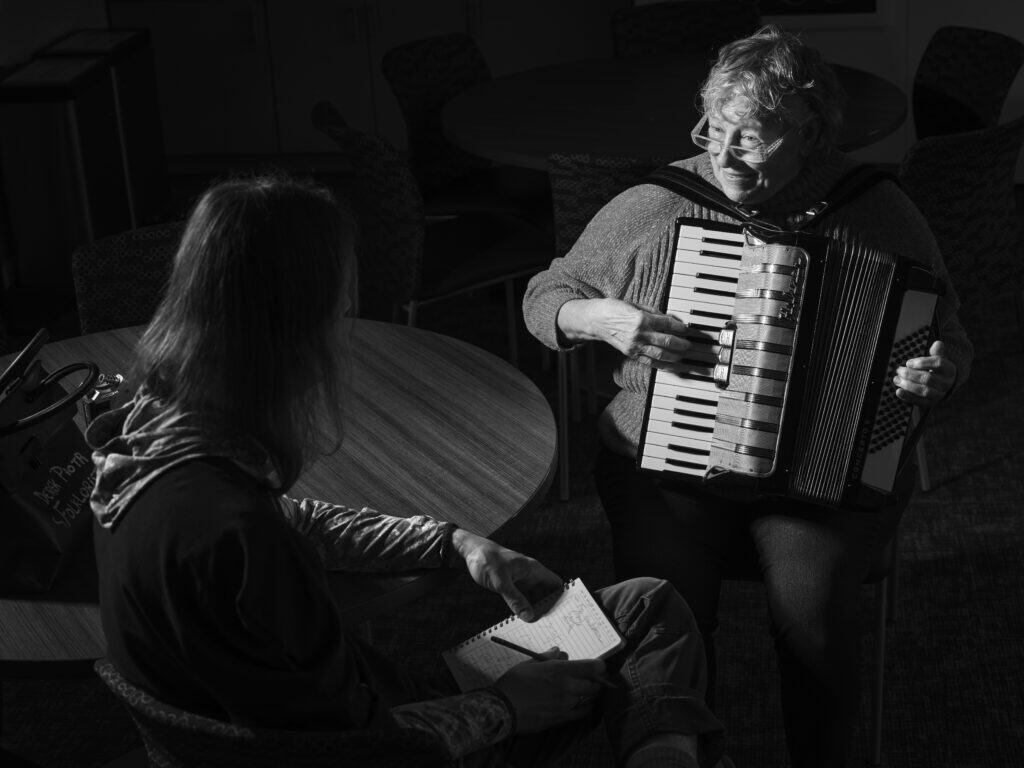
Photo credit: Ryan Lavine
What is your project about and why does it matter?
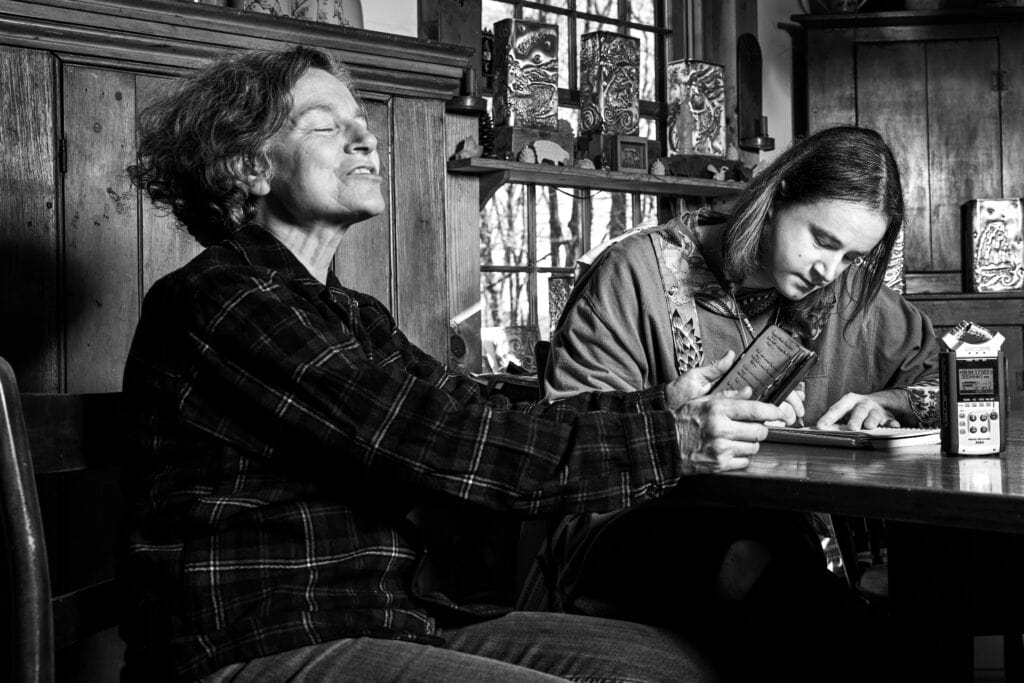
I am the project lead and creative director of The Derek Piotr Fieldwork Archive. I established the Fieldwork Archive as a web-based repository in August 2022 to preserve diverse representations of folklife via sound recordings I and other fieldworkers have made: ballads, hymns, tales, poems, children’s songs, and brief interviews among them, since March 2020. Thus far, I have collected more than 1,800 audio recordings. While I primarily focus on the “non-singer” (in other words, someone with no background in musical performance who can nevertheless relate a song or folkloric memory–anything from the most elaborate ballad to the shortest poem), the Archive features a variety of narrators, including professional singers, descendants of musicians, laypeople (i.e., people not connected to music professionally), and ballad scholars. The majority of the recordings in the Archive showcase unaccompanied vocal performances.
I have traveled everywhere from Iceland to Utah to record these songs from non-musicians. As I continue to do this work, I realize this project highlights the very human way traditional music is remembered through what I call “home-singing,” and celebrates the universal intimacy achieved by sharing memory through music.
How does oral history contribute to your project?
This project is entirely oral history, with a bit of an unusual bent – I am primarily looking for non-musicians with memories of traditional song, and am then asking these non-singers to sing for me. The resulting recordings permanently document what otherwise might be a private or ephemeral experience. Many of my contributors have never been in front of a microphone before. My favorite sessions start out with the disclaimer “Well, I’m not a singer…”.
I believe that this feeling so many people have (“I’m not a singer”) is a byproduct of the twentieth-century recording industry, which elevated those who could cut a record deal to the status of “singer” while shunning everyone else. I am seeking to correct this “fallacy of ability” by inviting everyday people who recall traditional music to step forward and sing for my archive. I am pleased to say I have consistent success with this method, and hopefully the people I interview and ask to sing realize their musical contributions are both legitimate and of value.
What do you like about using oral history as a methodology?
If I were simply looking for life stories, I could interview anyone. Asking people to sing adds a dimension of vulnerability and specificity to this project. I say vulnerability because, if one is not a self-identified singer well-practiced in giving vocal performances for others, capturing this kind of thing is very raw and fragile. However, I have also been fortunate to document memories from strangers I never dreamed I might be privy to – hospice stories, natural disaster survival stories, and very guarded faith healing practices, for example. For me, music is the ultimate form of expression for humanity, and this method also gives my sessions focus; inviting a song becomes the lodestar for connecting. Historical details naturally supplement the musical performance.
Why will fellow oral historians be interested in your project?
This is twentieth century-style fieldwork geared for today. The focus of the collection is on musical performances as the anchor, and the way recordings are edited echoes the decisions made 100 years ago about recordings of folk music – the centerpiece is on the song, with occasional commentary at the beginning or end of the recording for context. One example I will always vividly remember is the story told by Jill McLaughlan about her mother’s journey through hospice and into her last day alive. Her commentary about remembered songs actually overshadowed her performance in a visceral way.
In my work for the Archive, I have stylistically echoed other fine twentieth-century repositories: The Max Hunter Folk Song Collection, The Helen Hartness Flanders Ballad Collection, and the Wolf Folklore Collection among them. The song pages also become sort of ancestral totems with photos, reflections, and ephemera following on from the audio recording in a linear way. I will never forget when I interviewed the grandson of Brodie Franklin Halley by phone, and he wanted to “send me copies” of photos. What I instead received were nearly 100-year old original photos in the post! In adding these items to a given webpage, a shrine starts to build itself in memory of my narrators’ ancestors.
Where can people listen to, visit, and/or read about your project?
Fieldwork-Archive.com is the primary source, but reflections on the project can be found at FolkWise, The Traditional Song Forum, The Journal For Folklore and Education, and Country Dance & Song Society. These reflections hopefully aid the audience in finding the material accessible. We are also working to mirror the Archive in full on the Internet Archive.
What is the one thing you most want the audience to remember about your project?
Absolutely anyone can contribute! I place huge importance on the democracy of this project – you have Nicaraguan grandmothers rubbing up against Peggy Seeger, and no one gets preferential treatment. Everyone is recorded candidly remembering what they can of their experiences growing up around traditional music. With that in mind, I invite any readers to be in touch at fieldwork-archive.com/contact.
Is there anything else you would like to add that is important to know?
I would like to respond to these seven questions with the seven questions I use in my fieldwork:
Please Tell Me…
Where you are now (current city or town, state or province, country):
Where you come from (hometown and country):
Where you learned this song (through family, camp, church, or school):
Source’s name (maiden name if applicable), source’s source if known:
Source’s birthplace or hometown, and birthdate if known:
Age learned:
Purpose of song (was it a bedtime song, play song, religious or patriotic song?):