
Three OHR authors/articles were awarded the top prizes for Best Article at the 2025 OHA Annual Meeting:
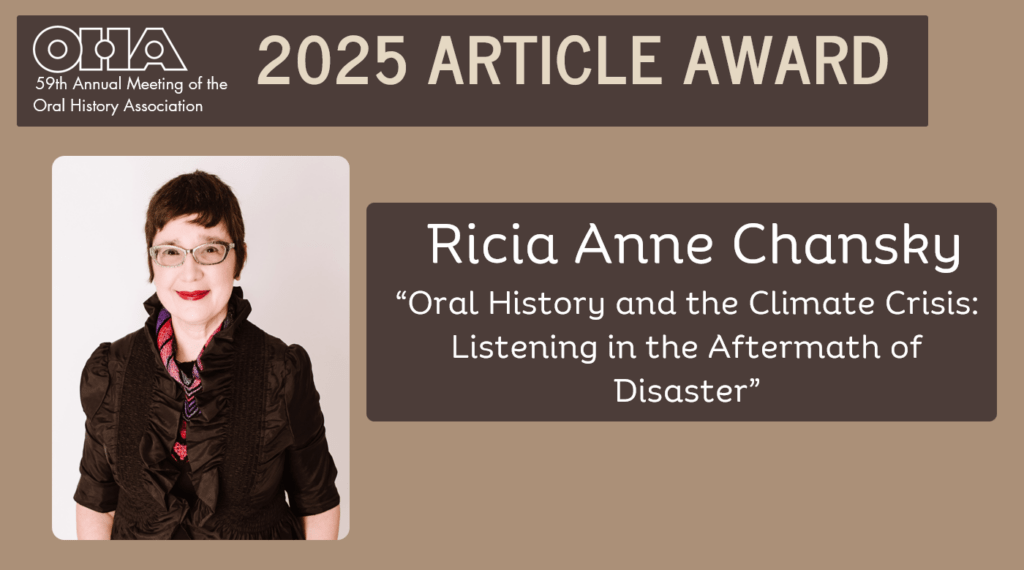
This article describes Professor Chansky’s collaborative undergraduate oral history projects that worked with a variety of community partners to document Puerto Ricans’ experiences with Hurricane Maria and its aftermath, and serves as a model for other crisis oral history projects. It goes beyond this description to suggest how ethical best practices might evolve for university-community collaborations, particularly in the aftermath of disaster; it argues that scholars need to record climate stories and integrate them into responses to the ongoing climate crisis; and it shows how scholars and curators can best implement post-custodial archiving practices for the benefit of the communities they serve.
Extra! interviewed Ricia regarding this article. See the full interview HERE and the Open Access version of the article HERE.
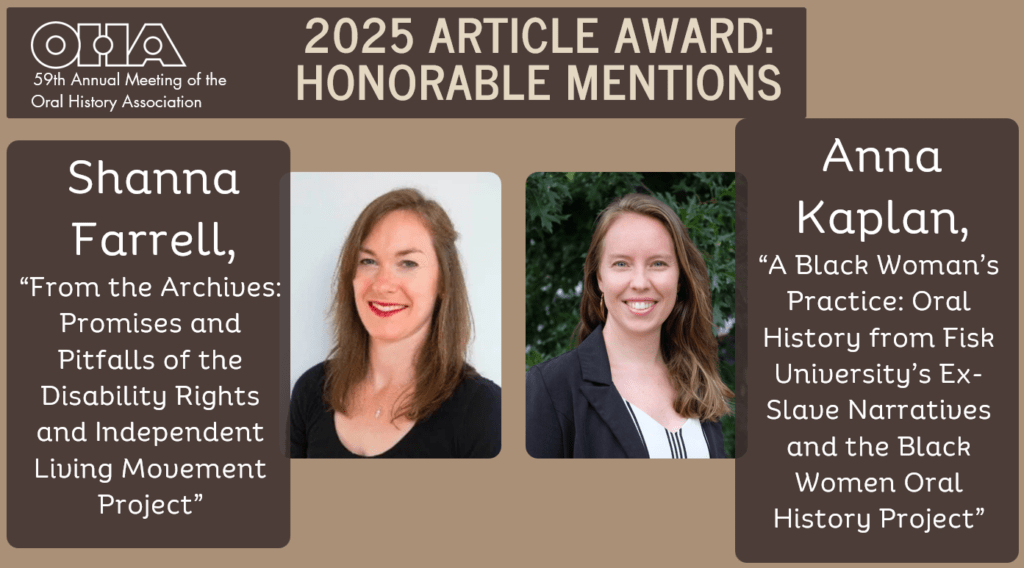
Shanna Farrell’s “From the Archives: Promises and Pitfalls of the Disability Rights and Independent Living Movement Project” details the history of the Disability Rights and Independent Living Movement Project at Cal-Berkeley and the archival collaborations and decisions that put the movement’s mantra—“Nothing about us without us”—into practice. She also considers the pitfalls inherent in making a legacy oral history collection accessible—or not—online, and the amount of sustained commitment at multiple levels that are necessary on the part of the institution to successfully manage digital collections.
Anna Kaplan’s article “A Black Woman’s Practice: Oral History from Fisk University’s Ex-Slave Narratives and the Black Women Oral History Project” showcases the work of a heretofore unsung “founding mother” of oral history, Ophelia Settle Egypt of Fisk University. Kaplan goes beyond the history of oral history and provides examples of Egypt’s and her collaborators’ anti-racist methodologies that present-day oral historians inside and outside of the academy who have similar concerns can emulate.
Extra! interviewed Anna regarding this article. See the full interview HERE and the Open Access version of the article HERE.