
By Jacey Anderson, Book Review Editor for the Oral History Review
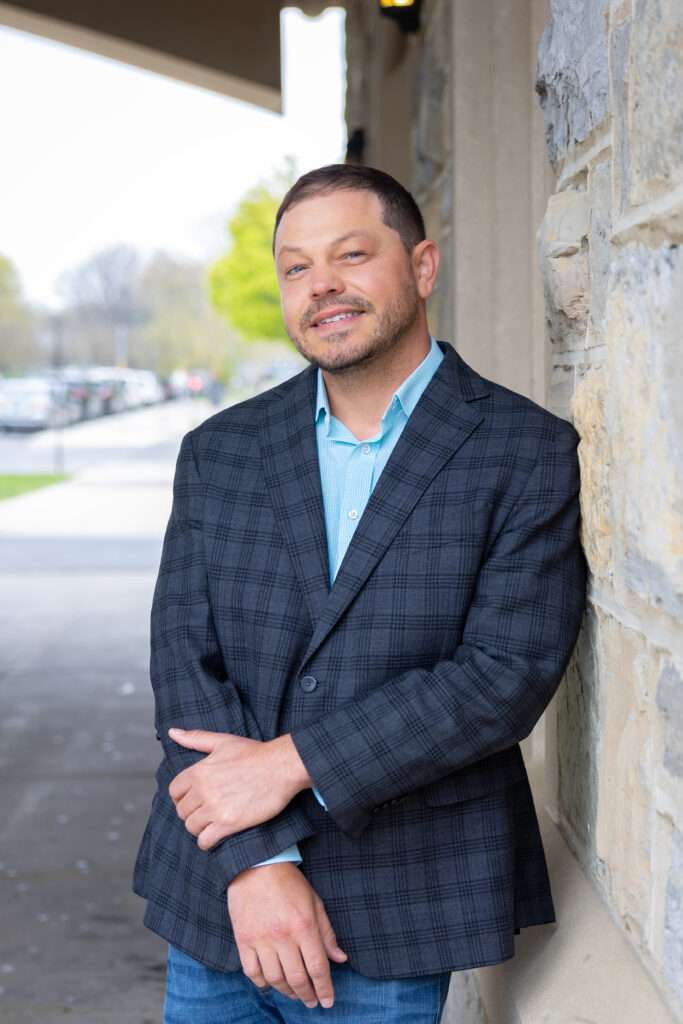
On March 4, I had the privilege of interviewing Dr. Jason A. Higgins.
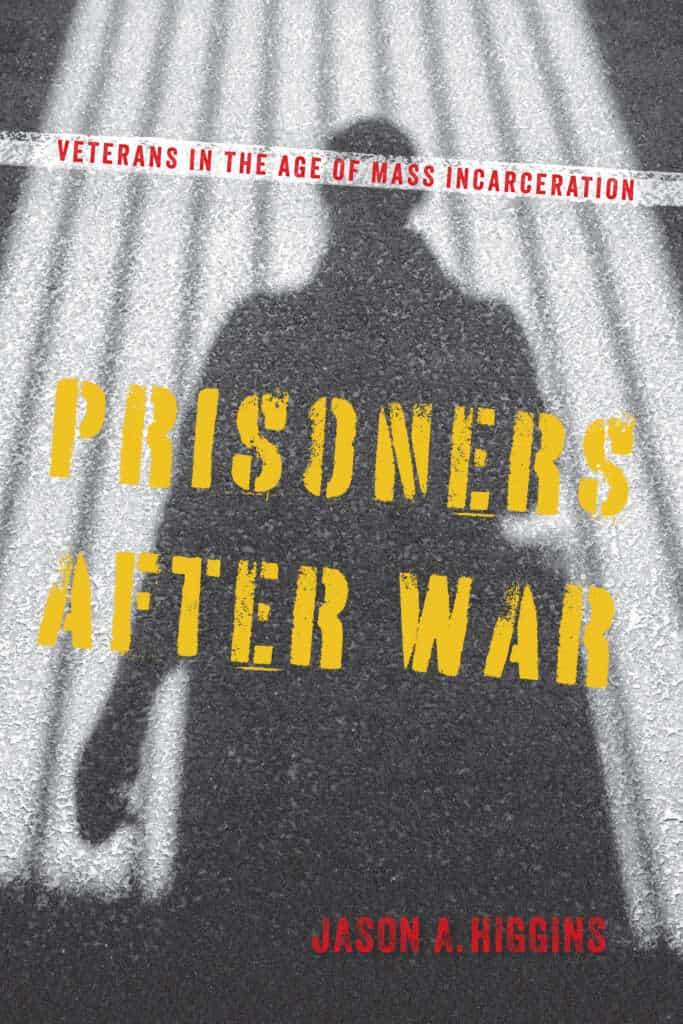
Higgins is the Digital Scholarship Coordinator for Virginia Tech Publishing & Press and an assistant professor of history. His book, Prisoners after War: Veterans in the Age of Mass Incarceration (UMass Press, 2024), won the 2025 Oral History Association Book Award. Higgins is the co-editor of Service Denied: Marginalized Veterans in Modern American History (UMass Press, 2022). His forthcoming publication, “Face to Face with Slavery,” is a digital humanities site based on an oral history project in collaboration with the More Than A Fraction Foundation and descendants of the families who were enslaved on the land that Virginia Tech occupies. He has been a member of the OHA since 2016 and currently serves on the OHA publications committee.
You can purchase a copy of Prisoners after War or read the open-access version by visiting UMass Press’s website.
Continue below for a full recording and transcript of the interview where we discuss the “long runway” that led to Prisoners after War, Jason’s approach to oral history and writing, and what’s next for him.
Jacey Anderson (JA): Hi Jason, thank you for being here today for Extra. How are you doing?
Jason Higgins (JH): Thank you. I’m doing well, Jacey. Thank you for the invitation.
JA: Can you just start by just telling us a little bit about your background?
JH: I’ve been doing oral history since I was an undergrad. And that was a long time ago now, it feels like. I started interviewing veterans in my community. I interviewed a World War II veteran who was at Tarawa, which was one of the most disastrous amphibious invasions in Marine Corps history. And I was really hooked after that. And I think that I’ve always been far more interested in storytelling and how the abstractions of history impact people’s daily lives. Especially if those impacts are felt within my own community. So that was kind of my historical interest from the beginning. And oral history was a nice path toward that. So after I interviewed that first veteran, I became interested in how war affects people’s lives afterwards, not just the year after homecoming, but the rest of their lives. And I started interviewing Vietnam veterans, and that was a very different experience compared to the World War II veteran. Even though the World War II veteran had experienced some of the worst atrocities you could imagine, he had a relatively good life afterwards. He was a grandfather, a parent, a pastor. And that was in stark contrast to a lot of the Vietnam veterans I was interviewing who were, I mean, also witnessed and experienced trauma, but their homecoming experiences were radically different. Some of them, you know, experienced alcoholism and substance use and, you know, would lead down the road toward involvement in the crime in the criminal justice system. So that’s kind of how I got interested in oral history. And then, of course, I got into it even more deeply in graduate school, but we can talk about that more if you want.
[02:24.7]
JA: Yeah, so it sounds like part of how you found your topic was through these oral history interviews. Was there anything that drew you to speaking with veterans?
JH: Yeah, well, like I said, I was really interested in talking with people in my own community. But whenever I went to graduate school at Oklahoma State University, I was in a Master’s of English program. I wanted to teach writing, but I found myself unfulfilled by the research. But I got lucky and got a fellowship for the Oklahoma Oral History Research Program at Oklahoma State. And that first summer of graduate school, I interviewed thirty more Vietnam veterans. And I started interviewing Black veterans and becoming far more interested in the experiences of African American veterans in the military and afterwards. And I started reading more widely, especially about mass incarceration. I had grown up in kind of an environment where the realities of mass incarceration were omnipresent. But I think part of my motivation was being enraged at the injustice of reading and hearing about the stories of Black veterans who were discriminated against, including some who were lynched after the Second World War. And then learning about Project 100,000 and the Vietnam War in which the US military and government were drafting disproportionately Black young men with poor education levels and their casualty rates were twice as high as white soldiers in the first couple years of Vietnam. That really inspired me to want to learn more and to contribute to that. So in that first year of the Master’s program, I decided I wanted to do a PhD in history.
And I eventually applied to UMass Amherst and wanted to study with Christian Appy, who is a kind of a world-renowned scholar of the Vietnam War. And he had done hundreds of oral histories. His second book, Patriots, was about the perspectives and experiences of people on all sides of the conflict, including Vietnamese and women. And so I had really great mentorship when I got to UMass Amherst. And Sam Redman was starting an oral history lab and it seemed like a really good fit. And I’m originally from Arkansas, by the way, so it was a bit of a culture shock to go from where I’m from to Massachusetts, but it worked out well. And yeah, I mean, I just really wanted to document stories that weren’t told before.
[05:20.815]
JA: Yeah, that sounds… So in many ways you had a really long runway to Prisoners after War, which we want to talk about today. Can you just kind of give us a brief description about the book project? What’s it about?
JH: Sure, the book is about the history of incarcerated veterans since the Vietnam War. I interviewed more than sixty veterans who were involved in the justice system. Most of them were formerly incarcerated. Some of them were volunteers and advocates for criminal justice reform. Some were even judges and police. And what I found was that even though no historians had written about incarcerated veterans, veterans for a long time have known about these problems.
They’ve just kind of been in the shadows of American memory of the Vietnam War. Very few scholars had even approached the topic of incarcerated veterans. Based on that long runway that you described, it seemed obvious to me. And in fact, as I was preparing to write a dissertation on the topic, I started a paper in my Master’s in English program on it. And, like, it seemed really obvious to me. And so I knew exactly why I wanted to write my dissertation on. I knew exactly why I wanted to write that first book on, because I fell into that topic and I thought that, you know, why not me? But yeah, so it traces the history of incarcerated veterans from Vietnam to Iraq and Afghanistan. And the book ends basically on January 6th, 2020, which is whenever I was mostly writing it, which was over COVID. That’s a different story though.
JA: Yeah, and that’s one of my favorite things about oral history, sort of what you talked about in undergrad, but then it sounds like also here, is sometimes our narrators, because they’re sharing the story, we learn what the story actually is. We might have preconceived notions beforehand, but through that process, it can really be eye-opening.
[07:23.213]
JH: That’s a really good point and something I like to tell students all the time is like you let the research process kind of guide it because at first after reading a lot about mass incarceration and reading about the experiences of Black Vietnam veterans, I thought I was writing a book about the experiences of Black Vietnam veterans coming home and ending up in jail and prison, but the story actually unfolded to include Iraq and Afghanistan veterans, working class white veterans who experience substance use disorder, trauma, disability, women. So it did unfold far beyond kind of my original idea for it, which I think is a really important point for any listeners is that you gotta let kind of the project avalanche and snowball in a way that you can’t control and then just be open to that.
[08:19.111]
JA: Can you talk a little bit more specifically about how you used oral history? And I’m also curious on how you selected narrators.
JH: Yeah, that’s a really good question. And like I said, it did snowball. At first I was like actively seeking out people to participate, but quickly like with social media and after I interviewed a few veterans, they would introduce me to more. And then people started finding me and that as a project unfolded made me feel a lot more comfortable about telling the stories of some of the most marginalized veterans for protection of their privacy is that they were reaching out to me wanting to share, right? So a lot of them were already engaged in some forms of activism and raising public awareness. But it was a long process, but it was really just like building a reputation and doing good work and then other people would introduce me to others. There was another question that you asked. Can you ask it again?
JA: I guess also just through your writing, how did you use these interviews?
[09:35.011]
JH: Yeah, I love talking about that. And most people don’t really ask about that because I really centered the stories of the veterans. So I didn’t find many models to base my book off of. But what I wanted to do was tell what I would call a multi-biographical history of veterans in the criminal justice system. And rather than just an excerpt, I wanted to center these individual stories because I believe that their stories matter and even though they weren’t famous and they were some of the most marginalized groups, I felt like I could show these global forces through the daily lives of these people who weren’t famous. So I centered their narratives and then I kind of engaged in the intersectional analysis of trauma and disability, race and gender and policy. And then I would kind of contextualize them with historiography. So I really saw the secondary literature as secondary to the narrative. So it has like, I don’t know, like sixty pages of footnotes or something. But I really did write my dissertation like a book. And Chris Appy was really supportive of that approach. I wanted this book to be accessible to a public audience. And therefore, like, of course I cite everything and I include the historiographical debates in the footnotes, but I really did center storytelling from the introduction to the end.
JA: So you mentioned writing in a way that’s accessible, which you do. I really appreciated that, reading your work. Who did you envision as your audience while you were writing, and do you still see that as the same audience now that the book’s been out in the world for a while?
[11:29.132]
JH: Yeah, I think every writer kind of hopes that anyone will read our book, especially if it’s coming from an academic background. And while your dissertation is really like two or three people are your audience. I did write the first draft of the book as a dissertation with a more public audience in mind. So maybe I should tell you a little bit more about my background. I’m first generation from Arkansas. No one in my family even went to college. And so I wanted to write, if I wanted to spend ten years of my life researching and writing a book, I wanted people from my own community to actually be able to understand what I was saying. So I tried to write it in simple prose to be able to communicate complex ideas with simplistic language. And I had the background in English, so I kind of studied style, and trying to make my writing as concise as possible, while also being rigorous and intellectually stimulating. And I don’t know if I achieved that as much as I had hoped, but I think so. Some of the best feedback I’ve gotten is from veterans, veterans who have reached out to me, especially those who’ve been formerly incarcerated, who saw a part of their own experience reflected in the stories I tell.
You know, I did win the Oral History Association Best Book Award, but to be honest with you, like that validation coming from veterans, especially formerly incarcerated veterans, meant more. It just meant more to me that like the story that I wrote was, it resonated with people and like they found part of their own experience in it. So I know that it’s being taught at writing groups with incarcerated veterans. I’m going to Cook County Jail in Chicago this month to visit with a group of incarcerated veterans who are reading the book. The University of Chicago Office of Military Affiliated Communities has purchased like 240 copies and they give them out to people in the veteran treatment courts and people who are working with veterans and that’s happened in other ways and other spaces as well but that because I’m going to Chicago this month that’s the one that really sticks in my mind.
[13:54.767]
So I think the veterans are my audience, but I hope that the public can also kind of think about the ways in which militarism affects people’s lived realities today as well. Most of American wars for the past half century have been fought on distant battlefields and other countries where we don’t see the effects of our wars, but they’re felt by a tiny fraction of veterans or fewer than one half of one percent of Americans actually serve in the military today. So they feel it. And their families feel it, of course, but most Americans are able to kind of live their lives without that. But we’re seeing today the effects of militarism on our own civil rights in America where militarized forces are occupying cities, right? So like those American wars in distant countries eventually blow back and what I hope to show with the book is that while incarcerated veterans You know are a fraction of the population. I think that the experiences that they have reflect wider problems in America such as trauma and disability and racism and all of the inequalities that we understand in the criminal justice system. So I was hoping that if I could show how those same forces impact veterans, maybe it would promote more empathy for everyone in the prison system today.
[15:26.938]
JA: Yeah, that makes me think, especially of your chapter, The War on Drugs, that’s not the exact title, but I think that really is somewhere people should look if they want to see more of what you’re talking about right now. A couple of follow-up questions with audience, though. So I want to ask you what oral historians might find valuable about your work, but then also just hearing what you’re saying now. I’m curious if veterans who read your work and reached out, if they shared anything that you would share here that they found valuable.
JH: Yeah, so I’ll start with the second part of that. Half of the book is, of course, about these injustices and how these discriminatory policies affect military members and veterans after they come home from war. But the second half of it is really about how veterans have organized. It’s about the development of these veteran treatment courts. There are over 600 of them. And one of the points I argue in the book is that it’s kind of the inverse of what happens during the War on Crime. In the War on Crime under Johnson, basically federal resources are taken away from communities, right? And they’re funneled into policing and prisons. And during the War on Drugs under Nixon, that becomes exacerbated. But what the veteran treatment courts do is they show how federal resources can be funneled back into communities at the grassroots level, providing access to disability services, mental health care, education, housing, employment opportunities, and how that actually prevents recidivism. They’re not a perfect answer to the problems of mass incarceration, but I think that it sets a really powerful precedent about how whenever you combine federal resources like through the VA with people in our community who genuinely care about people involved in the justice system, that it’s a powerful kind of model for reform.
Again, I would argue that the reasons why veterans go to prison, which is trauma and mental health and lack of education and opportunities, job opportunities and poverty, those are the same problems that most Americans end up in jail or prison for, right? So I’m trying to show that those are connected.
And then for oral historians, I hope that it will show how to navigate trauma in interviews. I was grounded in disability and trauma scholarship and my approaches.
[18:11.616]
I mean, I learned so much from other oral historians. So for me to think that they would learn from me, I don’t know. Maybe in the way I wrote the book, in trying to center those narratives and actually give them the space that I think that they needed to tell those stories rather than thinking of like excerpts and little block quotes to support a historical monograph or the opposite of that, which is like a collection of published narratives. I wanted to really produce a hybrid of the two. That could be storytelling and it could be rigorous scholarship.
And I can talk more about this today, but the seeds of the work I’ve been doing today with digital humanities were really planted during that project. I was trying to think of ways to use oral histories to engage public audiences, because most people are not going to go to the Library of Congress and listen to a two-hour oral history interview. So today I’m thinking much more about digital humanities tools and how we can make like a sixty-second video clip or even a podcast resonate with the public in ways that like traditional archived oral histories don’t or even published narratives rarely do.
[19:31.609]
JA: Yeah, I think that’s really wise and forward thinking and something oral historians talk about often, how do we engage different audiences. So just a couple more questions to wrap up. If there’s one thing you want readers to remember after reading your book, what might that be?
JH: One thing I want people to remember, I mean it circles back to what I was saying earlier about how most Americans don’t see the impacts of our wars, but they are felt among populations in the United States. And I guess what I want people to remember is that whenever you’re thinking about foreign policy and domestic policy, they’re not as disconnected as you might think. In fact, they speak to one another and you mentioned the chapter War, Drugs, and the War on Drugs. I mean, they’ll show in very direct ways how things like the War on Drugs are directly connected to the Vietnam War.
So I guess the other thing I want people to remember is that veterans aren’t necessarily victims. A lot of the Vietnam War scholarship that kind of cast Vietnam veterans as not active agents over their own lives, but rather the primary victims of American War. We have to also consider the actual victims of American War, which is usually innocent civilians who are caught between those forces, right?
Veterans are agents of their own lives, and while I show how these global forces constrain those lives, I hope that the book shows how actively they are shaping other people’s lives in their community. So that’s why I focus a lot on grassroots organizing and how the Vietnam Veterans Against the War and the Vietnam Veterans of America organize to promote systemic reforms, not only to the VA and healthcare and trauma and mental health, but also the criminal justice system. So that’s one thing I hope most people would take away because I think that a lot of Americans, they genuinely have good intentions when it comes to veterans, but too often they put them on pedestals and that dehumanizes people and it kind of ignores the reality of people’s lives where are susceptible to mental health and trauma and drugs.
[22:10.508]
So that’s one thing is to kind of knock veterans off a pedestal and show that they’re humans. But if we had a hierarchy in America, I would say that veterans are probably near the top of it, but incarcerated people are at the bottom of it. So how do you balance that and show that if most people genuinely do see veterans as the best of us, then we can show how our own systems are discriminating against and oppressing those same people. But those problems aren’t unique to veterans. It’s a problem that millions of Americans face today.
[22:52.014]
JA: Thank you. That reminds me, there’s a sentence that really stood out in your intro. I’m going to paraphrase it poorly, but it was something about, it’s about, the book is about people, or these narrators are people who served in war, were incarcerated, and are ordinary people.
JH: I mean, yeah, I think it’s just part of that mentality, especially since the 1980s where people rightfully wanted to separate the warrior from the war. And I think that’s a great thing. But to think of all people who serve in the military as heroes, I think that can be problematic, right? Like we can support veterans without, you know, lionizing them to the point where they only exist as a statue or as a bumper sticker or as a political prop. I think that that’s really problematic and that’s one of the problems of militarism in this country. Veterans are as diverse as the communities that they serve and represent. It’s especially alarming in this moment whenever the federal government is actively trying to erase the histories of Black veterans, especially like Jackie Robinson or Medgar Evers or others whose websites have been taken down from like the Department of Defense in the last year. You know, these are heroes in my view, because they not only served their country, but they also came back to a country that treated them as less than and then actively tried to change that situation for others, right? Civil rights icons.
I mean, there’s so many different ways that people engage in a second type of service for their communities. That’s something that I found really empowering in the story, is that it can be depressing. Like if I’m being honest, it was certainly depressing writing a book about this, right? I’m talking about some of the darkest parts of American history in the past fifty years. But one of the pleasant surprises that came out of doing the interviews is how many people actually transformed their lives and dedicated themselves to justice for others and who are breaking that cycle of intergenerational trauma in their own family. And I tried to capture that in the book and tell that story too, because I think that that’s important too.
[25:10.66]
JA: So you teed this up a little bit, but what’s next for you?
JH: That’s a question that I’m sure resonates with you as a postdoc, right? You’re always being asked to talk about, what’s your next project? What’s your next book? And to be frank, whenever I came across this idea, I knew that was my book. And I kept waiting on that to happen today, and it just hasn’t happened yet. I haven’t had that moment of like, that aha moment where like this is going to be my next book. But in the absence of that, I’ve been doing a lot of community engaged work, especially student-centered pedagogical work. So one of the projects I’m most proud of is a project that I’ve been working on since 2022 with descendant communities of the families whose ancestors were enslaved here at Virginia Tech. So we recorded thirty interviews with the the descendants of those families, but also a handful of interviews with the descendants of the enslavers. And what we were trying to show is like the potential of oral history to not only document the distant past and kind of the collective memories of slavery and the afterlife of slavery, but also the moment of reckoning. So as these two families are learning about their familial connections to the past and they’re engaging with one another. The project is really kind of born out of this hope for reconciliation. But what we found in the end of it is really the more powerful part of this project is how these families are reuniting with one another across the diaspora. So these are like communities that have been disconnected from one another over the past century and through these oral history projects and other projects such as the 150th anniversary of Virginia Tech where a hundred people came back to this land. Like they started reuniting and I thought that was a really beautiful thing. I just have a digital humanities publication that’s forthcoming. I just revised it after positive peer reviews. It’s pretty exciting. It’s called“Face to Face with Slavery.” That’s one of the most powerful ones I’ve been working on. And I’ve been continuing to do a lot of work with veterans, but mostly like training students and supervising interviews with students. I’ve been doing this for more than a decade and I wanted to like share those opportunities with other people who might be inspired by it too.
[27:51.15]
JA: Thanks, I look forward to the Digital Humanities book and learning more about that project. Anything else you’d like to share today?
JH: I mean, I think we covered it. I’m just really grateful for the opportunity to share more about the work with the Oral History Association. I’ve been involved with the OHA since 2016, which was a decade ago now. So I’ve always found that the OHA is kind of my intellectual home. So I’m really kind of honored for the opportunity to talk about the book with you.
JA: Well, we’re happy to have you here. So thanks so much for your time and keep in touch.