
Tuesday, July 21: 11:30-1PM CDT
Register Here: https://oha.memberclicks.net/lunchlearn2026
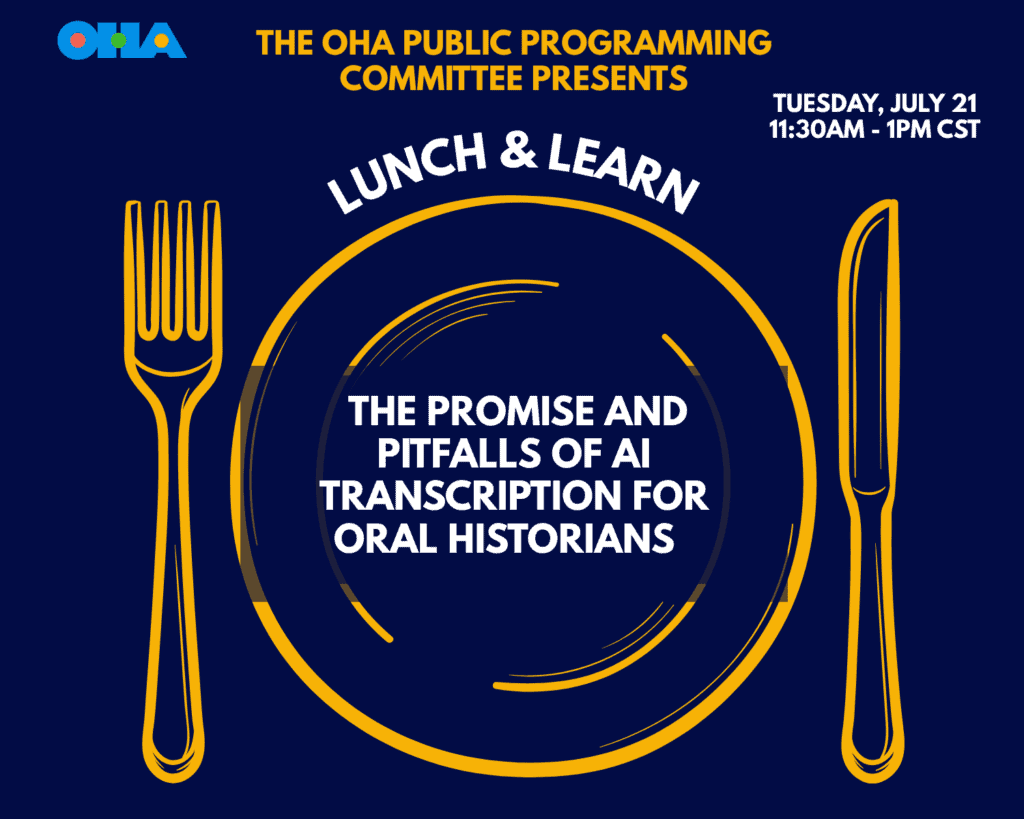
This “Lunch & Learn”-style online conversation will help oral historians determine whether Artificial Intelligence (AI)-based transcription services would make sense for projects they are working on. How has AI changed the transcription process? What issues should practitioners keep in mind? We’ll discuss ethical considerations (including privacy issues, informed consent, and intellectual property rights), the kinds of audio files that AI has difficulty with (examples: dialects and older recordings), and how traditional (human-centered) workflow processes might be changed by new AI-based softwares.
Register to receive the Zoom Link HERE.
Meet your Speakers:
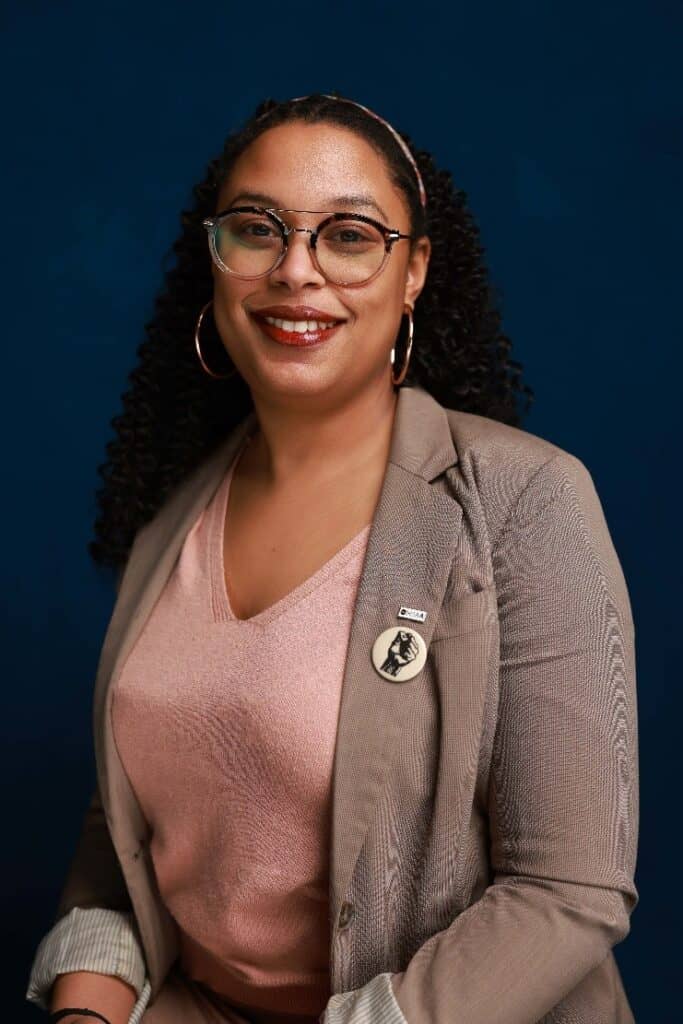
Alissa Rae Funderburk is the Mellon Foundation Oral Historian for the Margaret Walker Center at JSU. She maintains an oral history archive dedicated to the preservation, interpretation, and dissemination of Black history and culture. She previously developed an oral history course at the Roger Lehecka Double Discovery Center and conducted freelance interviews for Jersey City. She holds a bachelor’s degree in anthropology and a master’s degree in oral history from Columbia University. At Columbia, Alissa Rae served as Deputy Director of the Columbia Life Histories Project, and her thesis on the religious experiences of Black men in NYC was a continuation of her undergraduate studies of race, culture, and religion as a John W. Kluge Scholar.
Alissa Rae is 1st Vice President for the Oral History Association and creator of the nonprofit, The Black Oral Historians Network, a virtual meeting ground for Black memory workers. She serves as an interviewer for the NAACP LDF Oral History Project and consults on the HBCU LA Student Protest Archives Oral History Project. Her most recent project is Thee Black Pride in JXN, and her latest research centers on narrator compensation, reparations, and the transcription of Black voices. For more, visit alissaraefunderburk.com.
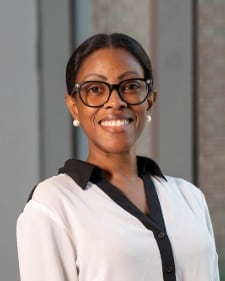
Alexis Johnson is the Community Oral Historian and Project Coordinator for the Lowcountry Oral History Initiative (LOHI) at the College of Charleston Libraries and an affiliated faculty member in the Department of History. Under LOHI, she leads the Community Oral History Training Program, a capacity-building initiative that teaches local and regional communities and organizations how to design, conduct, and share oral history projects. She holds a BA in English from Francis Marion University, an MA in Pan-African Studies (African American Studies concentration) from the University of Louisville, and a PhD in Social Foundations of Education (History of Education concentration) from the University of Virginia.
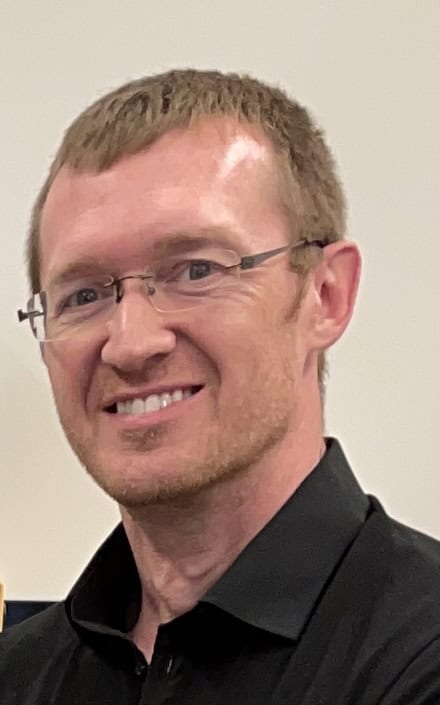
Sam Herley, Ph.D., is an assistant professor in the Department of History and Social Sciences at Chadron State College. He was the curator from 2015 to 2024 for the South Dakota Oral History Center (SDOHC) at the University of South Dakota, where he oversaw the holdings of the American Indian Research Project (AIRP). Recorded largely between 1966 and 2008, the AIRP at USD houses some 2,000 oral histories that originate from members of more than fifty tribal nations. During his time at the SDOHC, Herley worked with leaders and Tribal Historic Preservation Officers (THPOs) from all nine Tribal Nation communities in South Dakota and four in Nebraska on issues of oral history repatriation, preservation, and accessibility. Herley also served as an instructor at USD for the Department of History, Native American Studies Program, and Honors Program starting in 2011, and he also taught for The Indian University of North America at Crazy Horse Memorial. He earned his doctorate in history of the American West from the University of Nebraska-Lincoln in 2010 and is a graduate of Gettysburg College. His areas of interest include the American Civil War, the post-Civil War West, the presidency of Harry Truman, and historical relationships between the United States and Native American Tribal Nations.
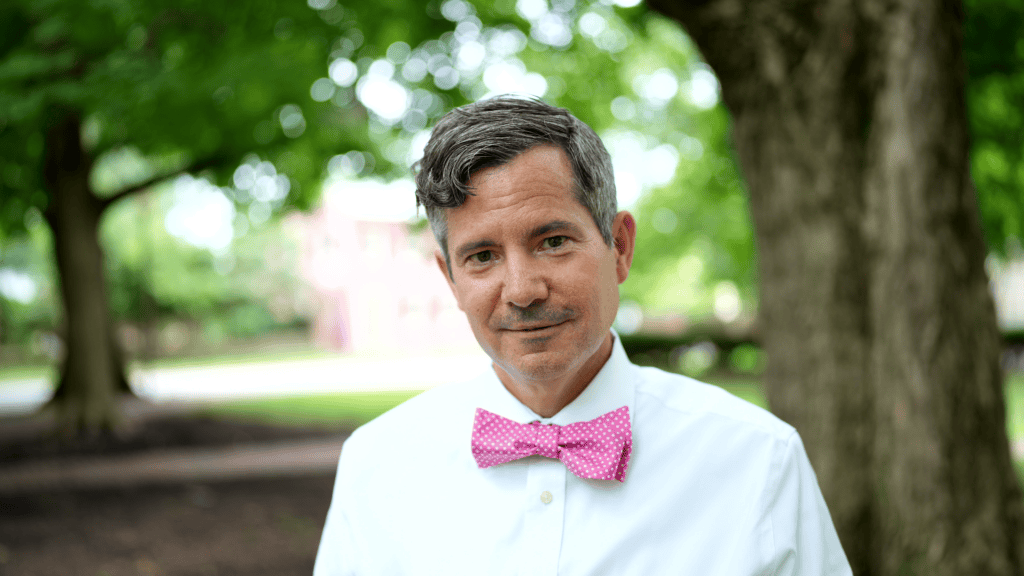
Doug Boyd, Ph.D., is Director of the Louie B. Nunn Center for Oral History at the University of Kentucky Libraries and a past president of the Oral History Association. He envisioned, designed, and implemented OHMS, a free, open-source system that synchronizes text with online audio and video. In 2026, Boyd was named a University Research Professor by the University of Kentucky. In 2019, he received a Fulbright Scholar Research Grant to collaborate with the National Library of Australia on exploring AI and enhancing access to online oral history.
Boyd is the author of Oral History: A Very Short Introduction, published by Oxford University Press in 2025. He is also the co-editor, with Mary A. Larson, of Oral History and Digital Humanities: Voice, Access, and Engagement, published by Palgrave Macmillan in 2014, and the author ofCrawfish Bottom: Recovering a Lost Kentucky Community, published by the University Press of Kentucky in August 2011. He writes the blogDigital Omnium: Oral History, Archives, and Digital Technology and has authored numerous articles on oral history, archives, and digital technologies.
In addition to writing, Boyd hosts and producesThe Wisdom Project podcast and co-hosts the Saving Stories radio program and podcast on Lexington’s NPR station, WUKY. He served as executive producer on the documentariesKentucky Bourbon Tales: Distilling the Family Business and Quest for the Perfect Bourbon, both of which continue to air on Kentucky Educational Television.
Previously, Boyd managed the Digital Program for the University of Alabama Libraries, served as Director of the Kentucky Oral History Commission, and worked as Senior Archivist for the oral history collection at the Kentucky Historical Society. He received his Ph.D. and M.A. in Folklore and Ethnomusicology from Indiana University and his B.A. in History from Denison University in Granville, Ohio.